You’ve tried everything to fix your sleep? Stop guessing and start assessing!

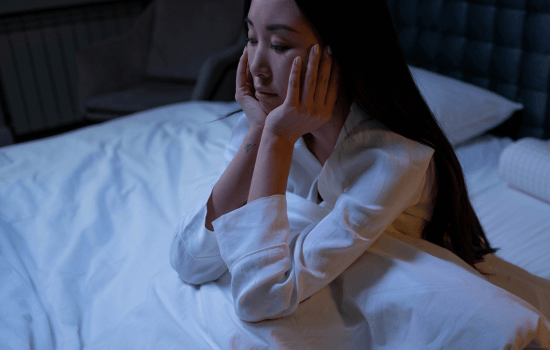
Calm woman lying in bed at night, eyes open, reflecting sleep struggles and the need for personalized nervous system assessment.

Magnesium. Breathwork. No screens after 9.
Journaling. Meditation. Expensive pillows.

Some nights, those things helped.
Most nights… not really.

They still wake up groggy.
Drained.
Like a zombie in a productivity costume.

Why?

Because trying everything is like throwing spaghetti at the wall and hoping one thing sticks.

I get it. They just want the pain to stop:

The pain of sleep deprivation.
The pain of no energy.
The pain of brain fog.
The pain of zombie mode.

Here’s what most people miss:

Most tools fail because they don’t match what your nervous system actually needs.

This is not assessing.
It’s guessing.

This is where assessment changes everything.

When I guide a client through their first sleep or energy assessment, we start testing how their nervous system actually responds, in real time.

  • Where your nervous system feels unsafe to rest
  • Which sensory systems are overloaded or underused
  • How their body reacts to breath, light, and movement
  • What brings your system back to balance and what throws it off

These assessments give us real-time data from your body.

They help us stop guessing and start building a truly personal plan for better sleep and energy.

So if your healing feels like a mystery…
It’s not that you’re not trying hard enough.
Your body’s just waiting for you to listen better.

Want to find out what your nervous system is actually asking for?

👉 Book your free intro call here

– Michi
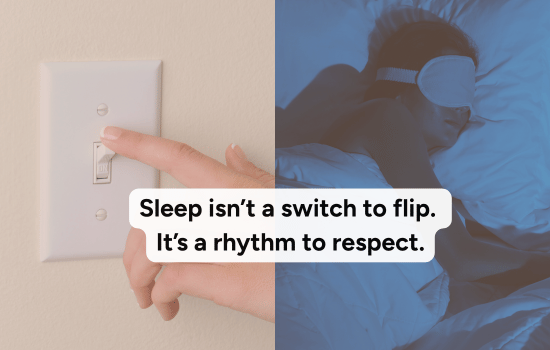
Sleep Isn’t a Light Switch. It’s a Dimmer.

Most people treat sleep like a light switch. One second you’re working in full hustle mode, the next you expect to be asleep.

But your nervous system doesn’t flip like that.
You can’t drive 150 km/h and just slam the brakes. Same with your brain.

Have you ever found yourself hustling on your laptop late at night?
Finishing one last email, tweaking one last offer, scheduling one last post?
And then… straight to bed.

No pause. No breath. No buffer.
You close the laptop and hope your body instantly shifts into rest mode. But it doesn’t, because you’re still in “doing” mode.

The brain needs a bridge.

A gentle transition from high gear to low.
From tension to release.

Think of it like walking from one room to another. The door in between matters. You take a breather before opening the next door.

That’s your transition phase. A built-in dimmer that slowly lowers activation and invites your system into rest.
Sleep isn’t a switch to flip. It’s a rhythm to respect.

Do you have a transition phase? What signals your body that it’s time to shift?

I would love to hear what works for you. Please share what it’s like below.

– Michi

Jet Lag Is Not Inevitable. It’s a Nervous System Challenge You Can Prepare For.

Business traveler with suitcase at airport window watching sunrise and airplane take off – symbolizing jet lag, travel fatigue, and circadian rhythm reset.

Most people treat jet lag like bad weather, annoying, unavoidable, and something to just “push through.

You don’t need to be wrecked after a long flight.

Jet lag isn’t just about time zones, it’s about what your nervous system needs to adapt and recover.

Here’s what I teach my high-performing clients who travel often.

Jet lag happens when your internal clock (circadian rhythm) gets out of sync with your new environment.

But with the right inputs light, timing, movement and rest you can support your brain and body to adapt faster. And that’s a game changer for anyone who travels for work and needs to perform on the go.

  1. Use light as your reset button.
    Your brain uses light to tell time. Get bright sunlight in your eyes first thing in the morning at your destination. It’s the fastest way to realign your internal clock.

  2. Pre-adjust your sleep.
    Shift your sleep/wake times a few days before flying. Even a small adjustment can make your body adapt more smoothly.

  3. Support circulation and hydration.
    Flying dehydrates you and reduces blood flow. Drink water, eat light, and move regularly.

You don’t have to “push through” jet lag. You just need to understand how your body clock works and help it adjust instead of override it.

Want to learn how to travel without crashing your energy and performance?

Let’s chat.

Book your free call.

– Michi

Mouth Taping for Better Sleep: This Is Happened When I Tried It

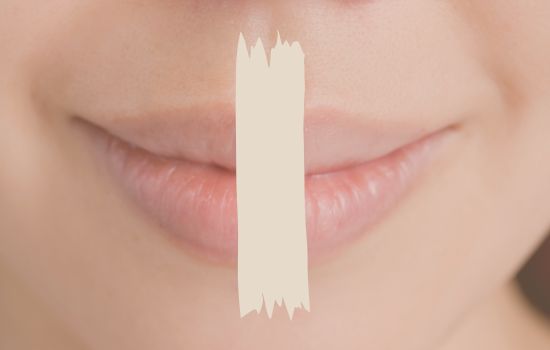
Closed lips with a tape vertically on it to stay closede during sleep.

Do you ever wake up with a dry mouth, sticky tongue, and that not-so-fresh breath?
I thought it was because of the winter air, until it happened in Portugal’s humid climate too.

Turns out, it wasn’t the dry air.
It was a scream from my nervous system.

Looking back, I’ve had this issue since childhood. I even remember asking my mom, when I was little, why my mouth felt so dry when I woke up.
Her advice? “Hang up a wet towel in your room.”
She meant well. But the problem wasn’t the air.

It wasn’t until I went deeper into respiration, applied neurology, and sleep science that things started to click.

A coach I trust mentioned mouth taping.
At first, I thought, “What? Tape my mouth shut? That sounds insane.”

And then survival mode kicked in:
“But what if my nose gets blocked and I can’t breathe?”

He said, “Your brain is smarter than that. It’ll wake you up. You won’t suffocate.”

So I tried it.

Not full-mouth tape. Just a small vertical strip.
Enough to guide my body back into nasal breathing without blocking airflow completely.

That night, I didn’t wake up with a dry mouth for the first time in weeks.
I actually felt rested.

Since I am doing it since years, I can tell it is a gamechanger. If I don’t have the tape with me if feel the difference every time.

Here’s the thing:
Mouth breathing is a stress signal. Your mouth is for food, not for breathing.
It dries out your airways, activates your stress response, and interrupts deep sleep.

Nasal breathing?
It calms your system, filters air, boosts oxygen delivery, and tells your brain, “You’re safe.”

Taping isn’t magic. But it’s a simple push in the right direction, toward a rhythm your body already connects with rest.

Sometimes the smallest tweaks make the biggest difference.
Your body is made for healing when you give it the right conditions.

Curious if your sleep struggles are tied to your nervous system?
Let’s find out together. Book a free call.

– Michi

Disclaimer: This isn’t medical advice — just something that worked for me. Always check with your body (or your doctor) before trying new tools.
Curious about how your own sleep could improve? Happy to chat.

Why Catching Up on Sleep on the Weekend Doesn’t Work

Woman in a yoga pose outdoors in front of modern buildings with a bold text overlay that reads “Your body runs on rhythm, not on credit!”—emphasizing the importance of consistent recovery over weekend sleep catch-up.

Ever told yourself: “It’s fine. I’ll just catch up on sleep this weekend”?

That lie got me through more overstimulated weeks than I want to admit.

I worked late. I stared at screens until midnight. I told myself I will catch up on the weeking with my sleep. Some weekends, I slept 9 or 10 hours just to feel human again. But by Monday, I still felt groggy and behind.

Here’s the truth: sleep doesn’t work like a bank account. You can’t withdraw all week and expect one big deposit to fix it.

Your body runs on rhythm, not credit.

When your sleep is all over the place, you’re not recovering, you’re confusing your internal clock. And that messes with everything:

  • Cortisol spikes too early or too late
  • Melatonin gets released at the wrong time
  • You start your week with a jet lag–like fog, even if you barely left your bed

To be clear, one night of longer sleep can help a little. But if you’re chronically depleted, weekend sleep-ins are like patching a sinking boat with duct tape.

Once I stopped treating sleep like a reward and started treating it like a rhythm, everything changed. I stopped relying on weekends to fix what I was breaking every night.

That meant:

  • Waking up at the same time every day (even weekends!)
  • Shutting down screens an hour before bed
  • Creating real recovery moments throughout my week

Because the only way to truly recover is rhythmically not reactively.

So next time you catch yourself pushing through the week thinking Saturday will save you, ask: What would change if rest became the rule, not the exception?

Because sleep isn’t a luxury. It’s a rhythm your body loves to follow, every single day.

Book a free call with me to learn how to build recovery into your week and not just your weekends.

– Michi

The 4 Pillars of Real Rest: Why 8 Hours of Sleep Isn’t Always Enough

Still Tired After 8 Hours? Read This.

You can give your body 8 full hours of sleep and still wake up groggy, heavy or foggy?

It’s not because you’re doing something wrong. It’s because quantity alone isn’t enough, it is just one piece of the puzzle.

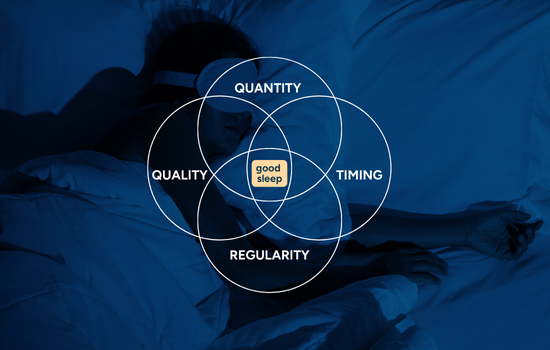
Matthew Walker calls it QQRT:

Quantity. Quality. Regularity. Timing.

They’re the four pillars that shape how restorative your sleep really is.

Most people stop at the first one.
But high performers? They need all four in alignment.

When even one of those is off you:
– lie in bed exhausted but awake
– wake up at 3am with your mind racing
– Or get up feeling like you barely rested at all

It feels like you show up to a race without fuel in the tank.

Here’s the part no one tells you: your nervous system governs all four.

It’s the conductor of your sleep orchestra. If it’s overstimulated, dysregulated, or on high alert, no supplement or app can override that.

Deep rest only happens when your body feels safe enough to let go.

So if you’re still tired after “enough” sleep, ask yourself:

What rhythm feels most off right now:
quantity, quality, regularity, or timing?
Naming it is the first step toward nervous system repair.

Not sure where to start? Let’s map it together.

Book your free call.

– Michi

You Don’t Need More Sleep. You Need More Safety.

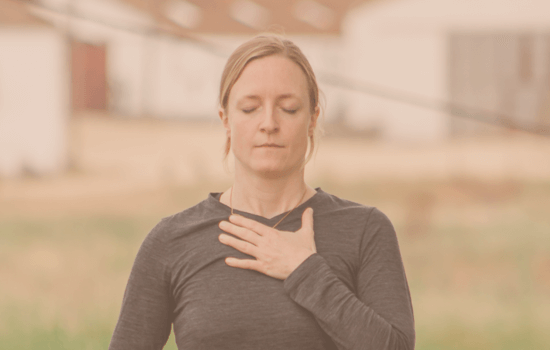
Woman with eyes closed and one hand on her chest, practicing a calming breath technique outdoors, symbolizing nervous system regulation and inner safety.

8 hours of sleep and you still feel exhausted?

Your nervous system doesn’t care what your sleep tracker says. It cares about one thing: safety.

Do you check off all the boxes: You check off all the boxes: 8 hours of sleep. Dark room. No caffeine after 2PM. Still, you wake up groggy. Drained. Like a zombie dragging through your day.

Sound familiar?

This isn’t just a “sleep problem.” It’s a nervous system problem. When your brain doesn’t feel safe you stay in light, shallow sleep. Hyper-alertness keeps you on standby, not letting you enter deep recovery mode.

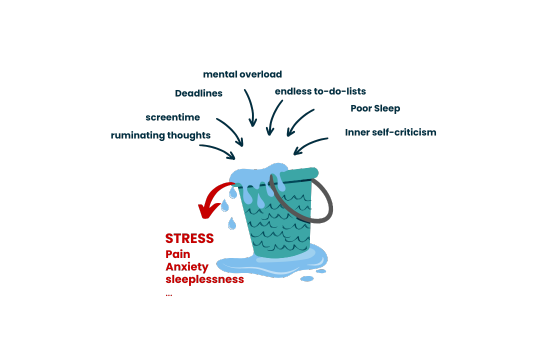
Think of your nervous system like a bucket. Throughout the day, little things drip into it: deadlines, screen time, overstimulation, mental overload, stored stress. And it adds up.

Graphic of a “threat bucket” overflowing from stressors like deadlines, screen time, poor sleep, and mental overload, leading to anxiety and sleeplessness.

By bedtime, your threat bucket is overflowing. Even if you fall asleep, your system is too dysregulated to fully recharge. (More about threat bucket here)

Here’s the part most people miss: Recovery isn’t something you do at night, it’s something you build throughout the day.

Instead of just pushing through the day like a zombie, start training your nervous system to reset regularly to keep the threat bucket low.

Try this 4-5x per day:
💡 Exhale twice as long as your inhale. → Inhale for 4. Exhale for 8. Repeat for 3-5 cycles. This creates safety in your body, resets your nervous system and prevents the bucket from overflowing.

If you’re waking up tired, it’s not about getting more sleep, it’s about getting quality sleep through safety.

You don’t need more hours.
You need more safety.

Curious if your threat bucket is overflowing? Let’s explore it together.

Book a call with me
– Michi

Can’t Fall Back Asleep? Stop Making These 7 Mistakes

Woman sitting awake in bed at night, looking anxious and unable to sleep.

Waking up at 3am isn’t the problem. What you do next is.

Ever caught yourself forcing yourself to fall back asleep as quickly as possible because you have an important meeting in the morning?

You know how important sleep is? Your anxiety increases and that only keeps you awake even longer.

Most people do things that spike alertness instead of supporting rest. Here’s what to stop doing (and what to try instead):

  1. Don’t read or watch something exciting
    Guess what your brain thinks if you read a thrilling crime novel and want to know who the murderer is? Your brain doesn’t know that it is “just reading.” It reactivates your alert-mode.

    ✅ Do this instead: Avoid stimulating content. Read or listen to something boring or familiar — something your brain has heard before and doesn’t need to stay alert for.

  2. Don’t switch on overhead lights
    Bright light coming from above signals your brain to wake up. It suppresses your natural melatonin instantly.

    ✅ Do this instead: Dim your lights and keep ithem at floor level. A red or amber night light would be best.

  3. Don’t check the time on your phone
    That ignites your anxiety level even more. Like: “Oh no it’s 3am and I only have 3 more hours to sleep…” Plus the brightness interrupts your sleep (see point 2).

    ✅ Do this instead: Leave your phone outside the bedroom an. Knowing the time will not help you, it just stresses you more.

  4. Don’t Lie in bed wide awake for more than 15 minutes
    You don’t need a watch for this. Lying awake too long trains your brain to associate bed with wakefulness.

    ✅ Do this instead: Get up and relax in a different area of you house, do some calming exercises and when you get this sleepy feeling, go back to bed.

  5. Don’t count sheep
    Science shows this method isn’t actually very effective.

    ✅ Do this instead: One of my favorite techniques came from a yoga teacher I never went back to (I didn’t really like his teaching haha…): Count backwards from 70. If you lose track or skip a number, start over. I’ve never made it to 0.

  6. Don’t eat sweets.
    Sugar spikes your blood sugar, which disrupts your hormones and can wake you up again later.

    ✅ Do this instead: Combine a small amount of something sweet with fat and salt, like one scoop of high-quality ice cream with a sprinkle of salt.

  7. Don’t go train
    Intense workouts trigger your sympathetic nervous system and therefore make you even more alert.

    ✅ Do this instead: Try gentle yoga or somatic movements that are more downregulating for your nervous system.

Middle-of-the-night wakeups aren’t always avoidable. But rest is trainable. The key is to stop confusing your brain with wake-up signals and to start giving it what it actually needs: safety, quiet, rhythm.

What helps you fall back asleep?

Drop it in the comments below.

– Michi

8 Things I Wish Every Entrepreneur Knew About Sleep

Split image showing contrast between a tired entrepreneur rubbing her eyes at a computer late at night and a joyful woman stretching outdoors in sunlight, symbolizing the transformation from burnout to energy through better sleep.

If you treat sleep like a weakness, your work will always suffer.
Sleep is not the enemy of progress. It’s the foundation of clarity, creativity, and execution.

  1. You can’t outperform your biology.
    Running on 4 or 5 hours a night might feel normal, but it’s not sustainable.
    You’re not “getting away with it.” Your body is quietly keeping score.
  2. Sleep debt is real, and it compounds.
    You think you’re saving time by staying up late. But you’re borrowing energy from tomorrow, and you’ll pay for it in fog, fatigue, and shallow thinking.
  3. Productivity without rest is pressure disguised as purpose.
    There’s a difference between flow and force. Sleep is what allows you to feel the difference.
  4. Your nervous system is your operating system.
    Screens are a minor issue. Screens are a minor issue. The real problem is that your brain never gets permission to shut down. Sleep becomes shallow when your system is still in fight-or-flight.
  5. Sleep creates space for better ideas.
    Your brain solves problems while you rest. That idea you’ve been chasing? It’s waiting on the other side of a good night’s sleep.
  6. Catching up on weekends doesn’t erase the damage.
    Sleeping in on Saturday doesn’t fix a week of short nights. Sleep is a rhythm and your body needs consistency to follow it.
  7. Most energy problems are sleep problems.
    It’s not that you lack discipline. You lack recovery. You’re not unmotivated, you’re under-slept.
  8. There is no high performance without deep recovery.
    Athletes know this. Founders forget it. You don’t get paid to hustle. You get paid to make clear, courageous decisions. Sleep sharpens both.

Sleep isn’t the reward you earn at the end of the day. It’s the foundation for your best work. The better you sleep, the clearer you think, the more you create, and the easier it becomes to lead with energy.

You don’t need another productivity hack.
You need a better relationship with recovery.

Let’s talk.

– Michi